Case Study: Optimizing CommonMark Markdown Parser with Blackfire.io
- fully support the entire CommonMark spec
- match the behavior of the JS reference implementation
- be well-written and super-extensible so that others can add their own functionality.
| Library | Avg. Parse Time | File/Class Count |
|---|---|---|
| Parsedown 1.6.0 | 2 ms | 1 |
| PHP Markdown 1.5.0 | 4 ms | 4 |
| PHP Markdown Extra 1.5.0 | 7 ms | 6 |
| CommonMark 0.12.0 | 46 ms | 117 |
Profiling with Blackfire
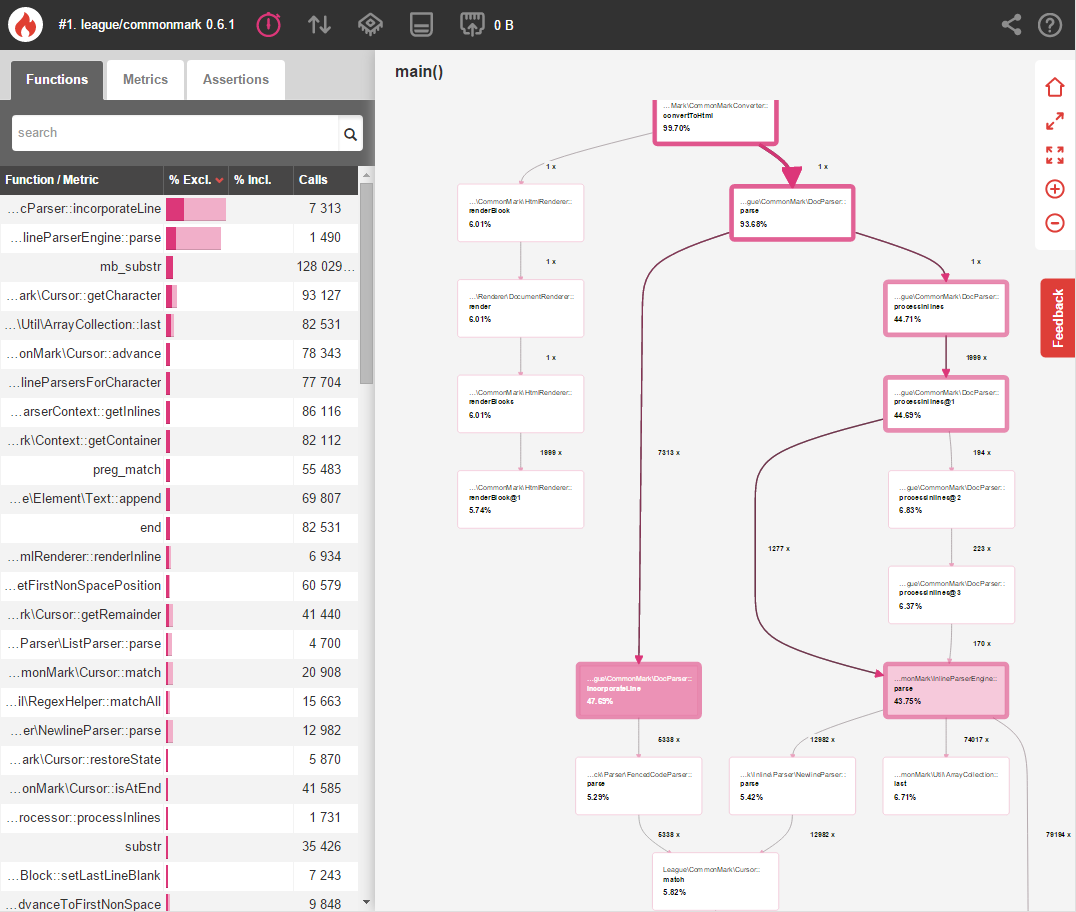
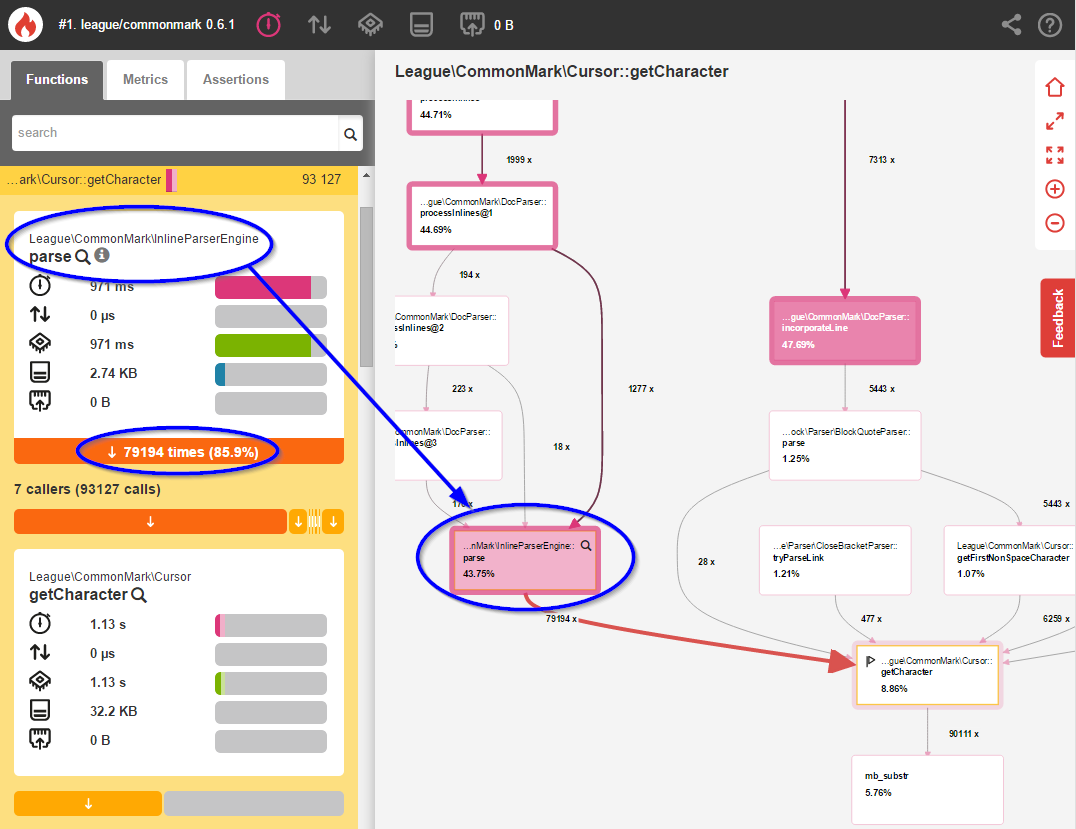
Optimization 1
public function parse(ContextInterface $context, Cursor $cursor)
{
    // Iterate through every single character in the current line
    while (($character = $cursor->getCharacter()) !== null) {
        // Check to see whether this character is a special Markdown character
        // If so, let it try to parse this part of the string
        foreach ($matchingParsers as $parser) {
            if ($res = $parser->parse($context, $inlineParserContext)) {
                continue 2;
            }
        }

        // If no parser could handle this character, then it must be a plain text character
        // Add this character to the current line of text
        $lastInline->append($character);
    }
}
public function parse(ContextInterface $context, Cursor $cursor)
{
    // Iterate through every single character in the current line
    while (($character = $cursor->getCharacter()) !== null) {
        // Check to see whether this character is a special Markdown character
        // If so, let it try to parse this part of the string
        foreach ($matchingParsers as $parser) {
            if ($res = $parser->parse($context, $inlineParserContext)) {
                continue 2;
            }
        }

        // If no parser could handle this character, then it must be a plain text character
        // NEW: Attempt to match multiple non-special characters at once.
        //      We use a dynamically-created regex which matches text from
        //      the current position until it hits a special character.
        $text = $cursor->match($this->environment->getInlineParserCharacterRegex());

        // Add the matching text to the current line of text
        $lastInline->append($character);
    }
}
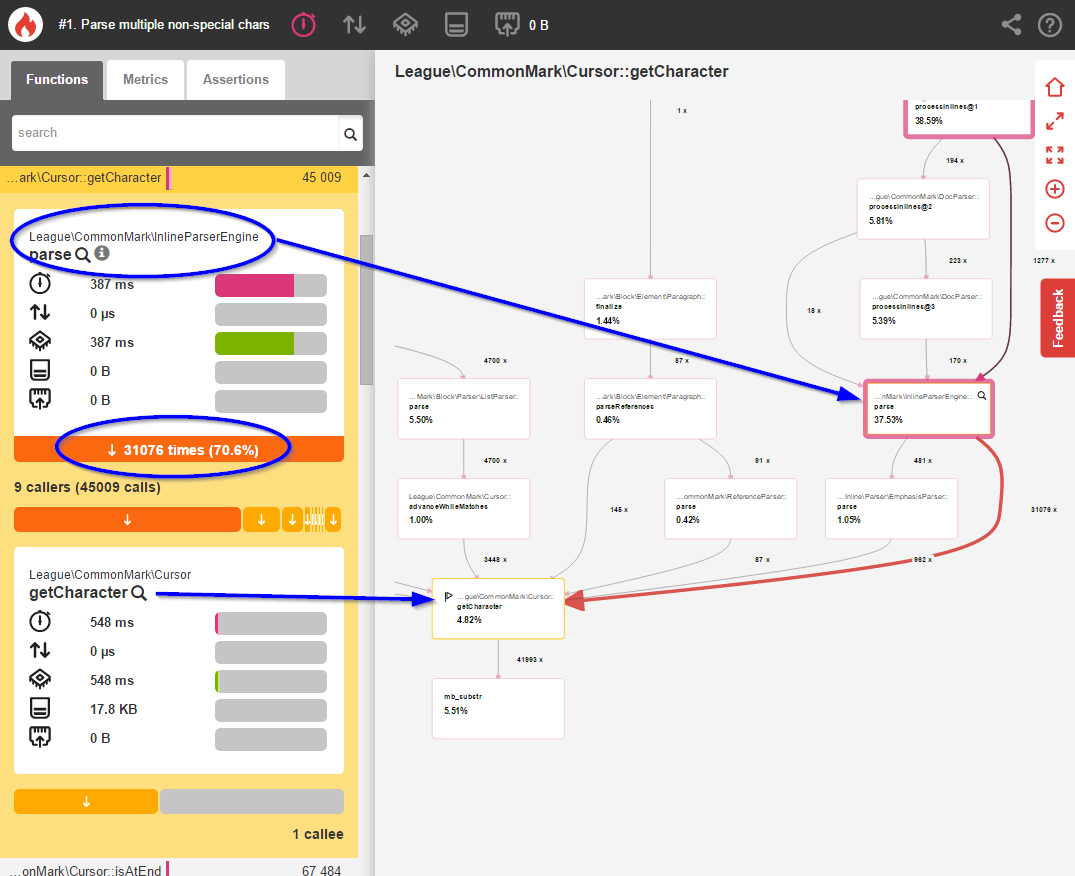
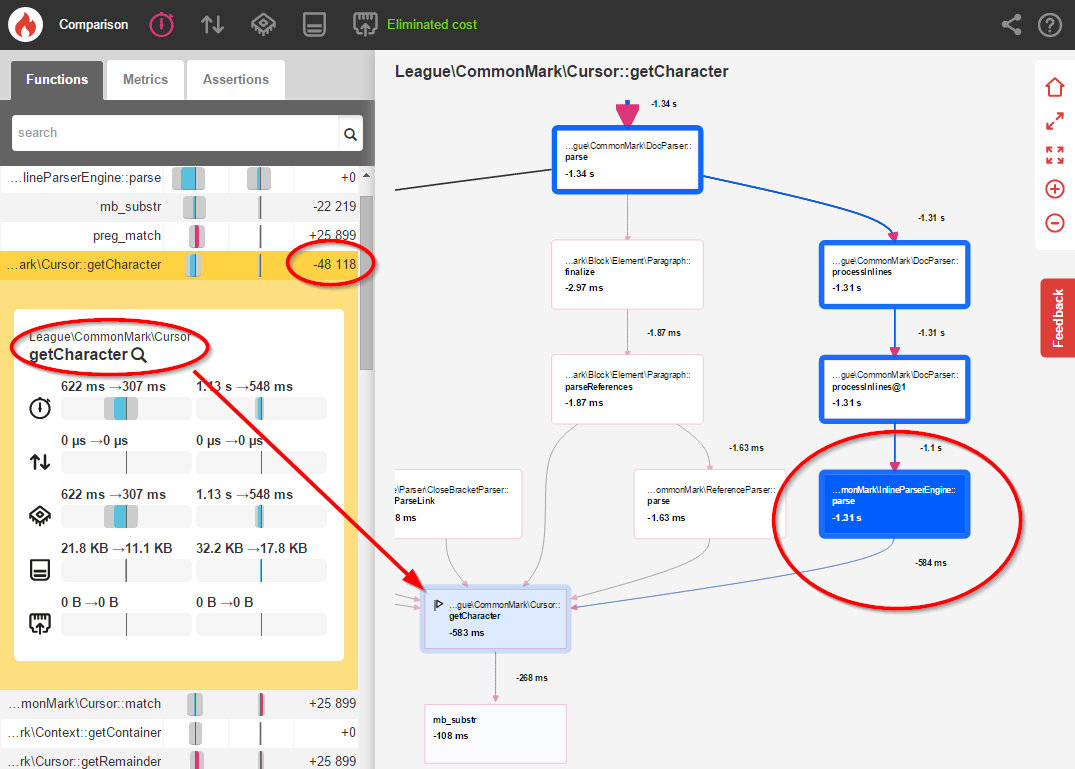
Optimization 2
class NewlineParser extends AbstractInlineParser {
    public function getCharacters() {
        return array("\n", " ");
    }

    public function parse(ContextInterface $context, InlineParserContext $inlineContext) {
        if ($m = $inlineContext->getCursor()->match('/^ *\n/')) {
            if (strlen($m) > 2) {
                $inlineContext->getInlines()->add(new Newline(Newline::HARDBREAK));
                return true;
            } elseif (strlen($m) > 0) {
                $inlineContext->getInlines()->add(new Newline(Newline::SOFTBREAK));
                return true;
            }
        }
        return false;
    }
}
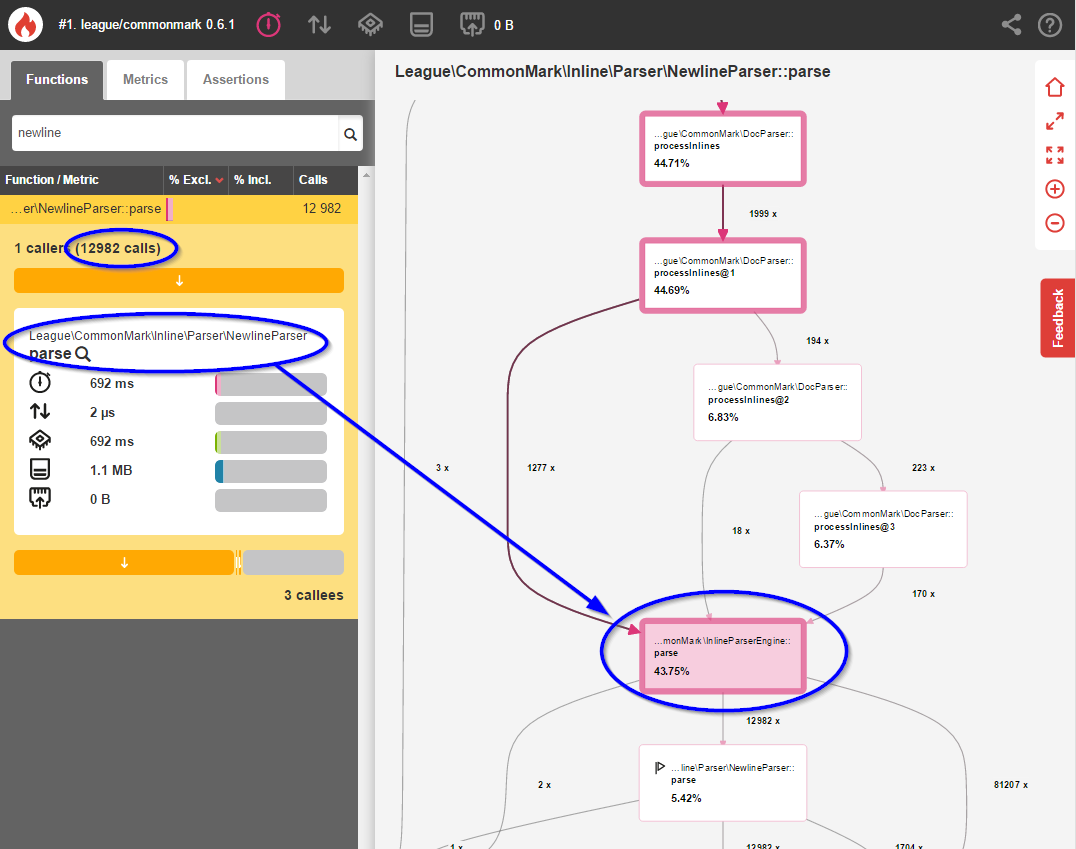
class NewlineParser extends AbstractInlineParser {
    public function getCharacters() {
        return array("\n");
    }

    public function parse(ContextInterface $context, InlineParserContext $inlineContext) {
        $inlineContext->getCursor()->advance();

        // Check previous text for trailing spaces
        $spaces = 0;
        $lastInline = $inlineContext->getInlines()->last();
        if ($lastInline && $lastInline instanceof Text) {
            // Count the number of spaces by using some `trim` logic
            $trimmed = rtrim($lastInline->getContent(), ' ');
            $spaces = strlen($lastInline->getContent()) - strlen($trimmed);
        }

        if ($spaces >= 2 ) {
            $inlineContext->getInlines()->add(new Newline(Newline::HARDBREAK));
        } else {
            $inlineContext->getInlines()->add(new Newline(Newline::SOFTBREAK));
        }
        return true;
    }
}
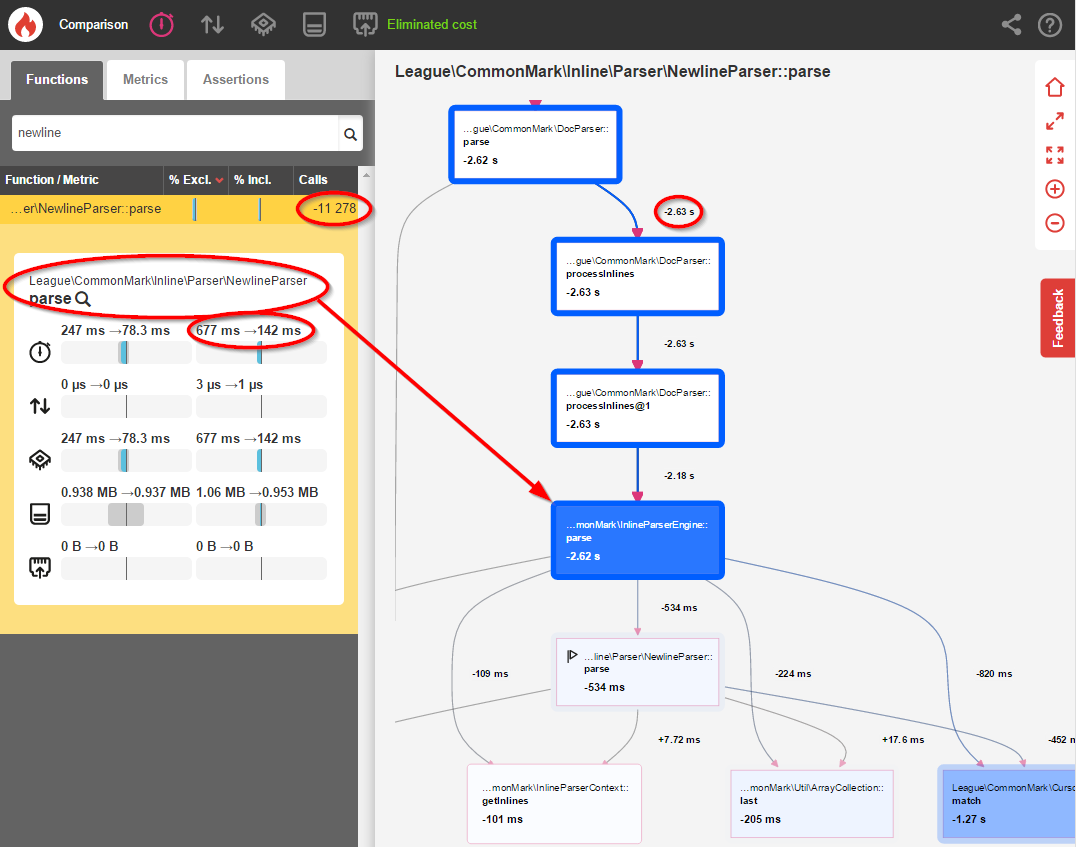
NewlineParser::parse()is now only called 1,704 times instead of 12,982 times (an 87% decrease)- General inline parsing time decreased by 61%
- Overall parsing speed improved by 23%

Comments
Post a Comment